
Types of Finishes
Durafloors has had experience with most coatings on the Australian market over the years and generally sticks to the three most popular, depending on the situation each coating option has its advantages and disadvantages.
Solvent based polyurethane - Used on most floors pre 2000s and still looks great in older homes, it is still considered the toughest and thickest coating available, comes in Gloss, Satin and Low sheen, but Due to health concerns it has been banned in Europe and America.
Pros - hardest wearing, least maintenance, Lower cost.
Cons - toxic when wet, very strong smell that can spoil food, goes orange over time and very orange in full sun.
Water-based polyurethane - A popular choice since late 2000s, the 2 part versions are hard wearing and give the floor a contemporary and Scandinavian look.
Available in Satin and Matt.
Pros - hard wearing, non toxic, very little smell, fastest drying, lowest discolouration.
Cons - lower build, higher cost, goes milky in full sun.
Hard wax oil - a combination of penetrating oils and wax’s, gives timber a more natural appearance. Available in Satin and Matt
Pros - non toxic, can be maintained without the need for re sanding, lower discolouration than solvent based.
Cons - low build, higher cost, regular maintenance required.
Staining
Changing the colour of timber can be challenging and risky but if done correctly can have huge positive impact on the look and feel of your home.
One of the biggest challenges is choosing the right colour, it’s always ideal to do samples on your floor and on a sample you can move around and place in different areas of your home. Lighting at different times of the day have a huge effect on how your floor looks and once the whole floor has been done it will be a lot more intense.
Types of staining
Direct stain - This is the best looking and only way to get a perfect natural looking stain job, after additional fine sanding removing fine scratch marks, a light coating of water is applied to the floor and dried overnight (known as water popping) which opens the wood grain and helps the stain absorb evenly as-well as helps the clear coat to adhere better, the stain is applied with an applicator and ragged or buffed off, usually requires at least 24 hours to dry before the clear coats can be applied.
Roll on and Leave - some brands offer a roll on and leave direct stain which can cut out some of the time and high cost associated with staining without having to rag off, a good option for an older floor in bad condition where stains and character marks already exist.
Tinting - the cheapest, most problematic and nastiest stain in the flooring universe, this is risky for any professional to do if you’re trying to achieve medium or dark stain. But can be a good option under certain circumstances to colour match an existing area or add additional depth to an existing direct stain provided only a small amount of tint is added to the coating.
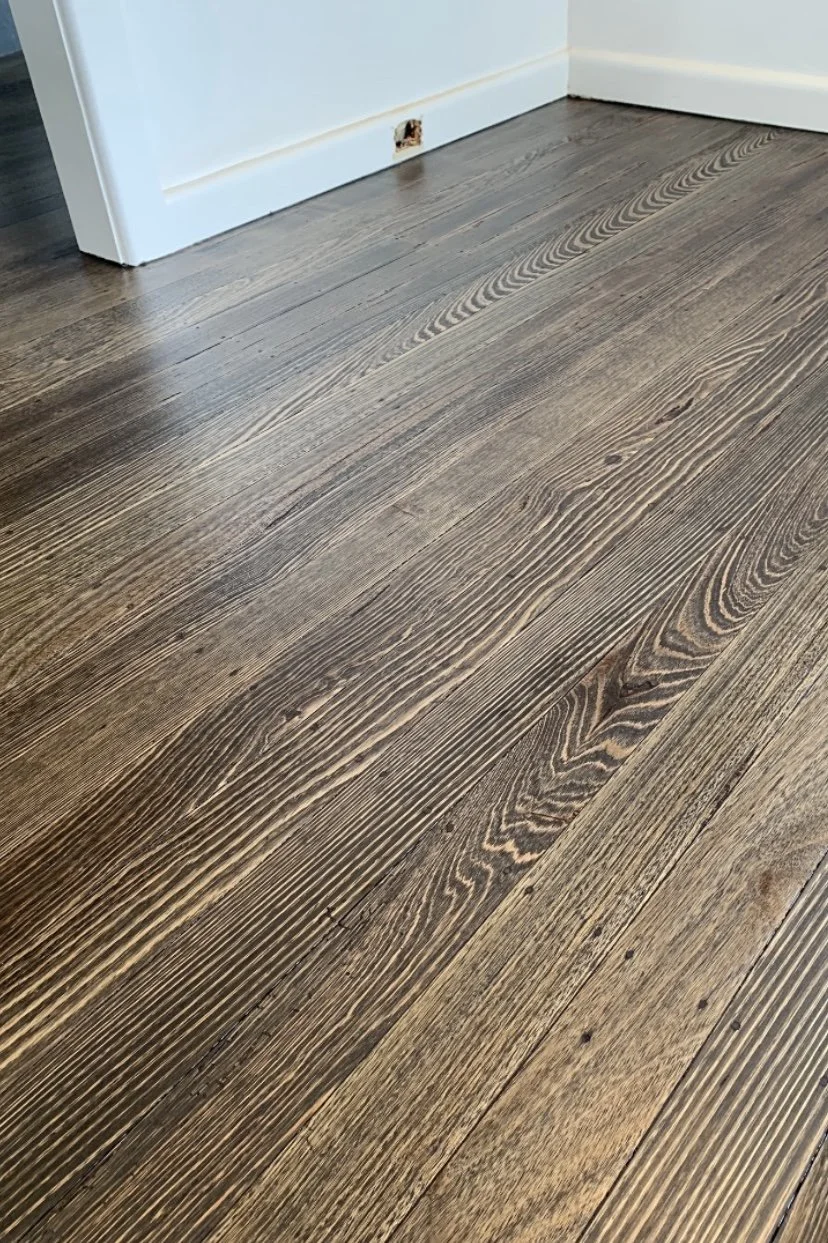
Direct stain on an old Tasmanian oak floor in leongatha.